Democratic News
Featured Stories
News Feed
Top democratic lawmakers in both the House and Senate today called on the State Board of Education to dismiss Superintendent Dick Ross, citing the recent scandal involving the cover up of failing charter school grades in state evaluations, the plan to takeover the Youngstown public schools crafted behind closed doors, and general lack of accountability to the State Board of Education and the public.
State Rep. Teresa Fedor (D-Toledo) today called on State Auditor Dave Yost to launch an official investigation into reports that Education Department officials illegally manipulated a key evaluation of charter school oversight agencies by omitting failing grades from many online charters. The deliberate omission by officials boosted the ratings of two oversight agencies, potentially qualifying them for new state perks.
State Representatives David Leland (D-Columbus) and Michael Stinziano (D-Columbus) today announced plans to introduce legislation to prevent the destruction of natural buffer zones growing around Hoover Reservoir. The legislation will repeal a provision included in the state budget that allows residents to significantly alter those zones.
State Rep. Teresa Fedor (D-Toledo) today called for the resignation of State Superintendent Richard Ross and an investigation into the Ohio Department of Education after it was reported that top department officials neglected to include failing online schools in a key evaluation of charter school oversight agencies. The deliberate omission by officials boosted the ratings of two oversight agencies, potentially qualifying them for new state perks.
“I am outraged by what appears to be a deliberate violation of the law in order to cover up the widespread failure of online and dropout recovery charter schools. I believe the state superintendent should step down immediately as the result of alleged violations and data-scrubbing of online charter schools grades that took place under his leadership.”
State Rep. Kathleen Clyde (D-Kent) today announced the formal introduction of House Bill 181, the Registration Modernization Act, which will modernize voter registration in Ohio and potentially add over 1 million people to the voting rolls. The bill was referred to the House Government Accountability and Oversight Committee of which Rep. Clyde is the ranking minority member.
“I am proud to offer HB 181, the Registration Modernization Act, to make the first step to the ballot box much easier for all Ohioans,” said Rep. Clyde. “There is a wide gap between the haves and have-nots in this country and voting access should not fall into that gap. We can move toward greater equality and a healthier democracy by welcoming and empowering every Ohioan to vote.”
The Registration Modernization Act will do the following:
- Automatically register to vote all Ohioans with a drivers’ license or state ID.
- Automatically register to vote all Ohioans who interact with Jobs and Family Services offices and other agencies designated by the federal Motor Voter law.
- Automatically register to vote all graduating Ohio high school students who are eligible to vote.
- Allow every person 21 days to opt out of voter registration in person or by mail.
- Provide online voter registration for all eligible Ohioans, not just those with a photo ID.
- Potentially add over 1 million eligible Ohioans to the voting rolls and update thousands more.
- &nbs
The Ohio House Education Committee today favorably passed Rep. Denise Driehaus’ (D-Cincinnati) bipartisan legislation, House Bill 70, unanimously. Based on Cincinnati’s Community Learning Centers (CLC), the model would allow any Ohio school to work with parents and community members to provide supplemental services for students such as on-site healthcare, dental care, tutoring, recreation and mental health services.
“I am thrilled by the bipartisan support for this legislation,” said Rep. Driehaus. “This was an important step in the process of allowing our schools to transform their buildings beyond the traditional place of providing only education. Many other states have come to visit Cincinnati’s model and now all of Ohio will have the opportunity to be on the forefront of twenty-first century education.”
HB 70 brings families, residents, students, educators and business leaders together to review the strengths and needs of their individual communities to decide how best to support students and their families. Together, the group decides which services are important for children in the neighborhood. Public-private partnerships are a key element to the CLCs. The partners use their own dollars to provide services so that no additional education funding is necessary.
Ranking Democratic member on the House Education Committee, State Rep. Teresa Fedor (D-Toledo) today issued the following statement in response to reported allegations that an online charter school, Ohio Virtual Academy (OHVA), has been collecting taxpayer money for hundreds of students who should have been withdrawn for truancy many months ago:
“The detailed information my office received demands a thorough investigation. OHVA has a long history of poor academic performance, and now we are seeing a pattern of poor fiscal performance. We must put in place the reforms needed to ensure it does not happen again– for Ohio’s taxpayers and for our children.”
Today, Fedor sent a letter to the House Education Committee detailing the attendance rigging allegations.
Ohio Gov. John Kasich signed House Bill 47 today, which was introduced by Reps. Denise Driehaus and Lou Blessing III. The law will allow certain cities to create Outdoor Refreshment Districts, where the public can enjoy an alcoholic beverage outside, within a specified area of an Ohio community.
"This law will help create economic opportunity for our communities while growing local Ohio businesses. These districts will become destination spots which will create excitement and provide a critical mass of customers for the restaurants, bars and shops in the district and nearby,” Driehaus said.
The new law will allow cities with a population of over 35,000 to apply for Outdoor Refreshment District areas within their cities. Specifically, it will allow cities with a population between 35,000 and 50,000 to create one Outdoor Refreshment District, while cities with over 50,000 will have the opportunity to create two. After two years, cities with populations of less than 35,000 will be permitted to create a district if they meet certain requirements.
Ohio Legislative Black Caucus President (OLBC) and State Rep. Alicia Reece (D-Cincinnati) released the following statement after joining Gov. John Kasich and her colleagues on the state’s 24-member Community-Police Relations Task Force today to present their recommendations on strengthening Ohio’s justice system:
“I am proud of our recommendations we put forth and believe they are the first step in restoring faith and trust in our justice system. I am also pleased that the governor used our work in Cincinnati as a model for a collaborative approach in implementing these recommendations at a statewide level.
“We need to hold this effort and public officials in our state accountable to ensure that the first step we took today is not the last, but the beginning of real and lasting reform. I am hopeful the legislature takes our findings seriously as well and works with us on justice reform bills to give our work the permanence and funding needed to make our communities open for people of all backgrounds to lead happy and productive lives free from fear.
“In addition to reforms in our justice system, we must also take seriously the need for economic reforms that level the playing field for all people—regardless of race—to have a fair shot at prosperity in our state. I look forward to seeing a report on our progress before summer begins.”
While serving as city councilwoman, Rep. Reece played an integral role in brokering Cincinnati’s 2002 police-community relations collaborative agreement following the city’s 2001 race riots sparked by the police shooting of 19-year-old Timothy Thomas.
State Rep. Greta Johnson (D-Akron) today applauded the House Judiciary panel’s passage of House Bill 123, the lawmaker’s bipartisan bill to eliminate some costly pre-sentence investigation reports (PSI) in an effort to clean up Ohio’s judicial system.
“This legislation benefits taxpayers and connects offenders with immediate access to the treatment and services they so desperately need,” said Rep. Johnson. “We have a real shot at saving hundreds of dollars per case in administrative costs while increasing community safety and overall efficiency of the judicial system. I am pleased that the Ohio Supreme Court and the House of Representatives recognize this as an unnecessary burden on local communities and their dwindling funds.”
At a ribbon-cutting and dedication ceremony this afternoon, State Rep. Teresa Fedor (D-Toledo) and several leaders of the community celebrated the opening of a Human Trafficking and Social Justice Institute within the College of Social Justice and Human Service at the University of Toledo.
“I’m honored to be part of the formal dedication of the University of Toledo’s Human Trafficking and Social Justice Institute,” said Rep. Fedor. “UT’s Human Trafficking Institute will build on the landmark research and prestigious work of UT Professor Dr. Celia Williamson, and it will have a profound impact, not just locally, but worldwide. As the only one of its kind, the work of this institute will go a long way toward rescuing and restoring victims, as well as aiding in the prosecution of the criminals.”
State Rep. Michele Lepore-Hagan (D-Youngstown) has urged Speaker of the House Cliff Rosenberger to convene a special session in order to hold a vote to override the governor’s veto of a budget provision related state developmental centers. Lepore-Hagan’s bipartisan provision in the recently passed state budget would have stayed the closure of the Youngstown and Montgomery Developmental Centers until further review by a 13-member commission.
State Reps. Nickie J. Antonio (D-Lakewood) and Niraj Antani (R-Miami Township) today called for an end to capital punishment in Ohio and introduced bipartisan legislation to abolish the death penalty and replace it with a life sentence without parole.
Wednesday, State Rep. Emilia Sykes (D-Akron) and Ohio House Democratic Caucus members stood in opposition to the state’s two-year budget proposal, House Bill 64. Democratic legislators said the bill failed to lay out a real plan for the future of the state and instead advanced partisan attacks on working Ohioans and policies that rig the tax system to help the richest one-percent and special interests.
Democrats offered several alternative proposals* that would have put more money in the pockets of middle class Ohioans, stopped attacks on working Ohioans, ensured equal pay for women, reduced the state’s sales tax and maintained access to healthcare for pregnant working mothers and women needing cancer treatment. The Democratic proposals were shot down along party lines.
“I am very disappointed that the Ohio House has decided against working families by passing this budget,” said Rep. Sykes. “I'm especially disappointed that an amendment I offered that would reduce Ohio's abysmal infant mortality rate was tabled. People say, ‘Show me your budget and I'll show you your priorities.’ The Ohio House showed us that working families, pregnant women, babies and an educated work force are not our priorities."
Today, State Rep. and highest ranking Democrat on the state budget panel Denise Driehaus (D-Cincinnati) stood in opposition to the state’s two-year, $131.6 billion budget proposal, House Bill 64. Democratic members said a bill of that magnitude should have been a strategic and targeted blueprint to grow the state’s economy for the future, but instead became a vehicle for tax cuts that favor the richest one-percent and last-minute attacks on working Ohioans.
“This budget doesn’t work to provide a real plan for the future of Ohio,” said Driehaus. “Not only does this budget fail to lay out a plan for growing and strengthening our middle class and Ohio’s economy for the future, it attacks working and middle class Ohioans.”
State Rep. Kent Smith (D-Euclid) today announced a proposal to promote music industry growth in Ohio. The proposed Ohio Sound Recording Investor Tax Credit, or "OhioSounds," would provide incentives for music production, studio construction and recording within the state. Smith submitted the proposal for consideration in the state budget.
“OhioSounds would solidify the state’s commitment to our musical legacy and help encourage further creative endeavors from Ohio musicians while driving economic growth in a competitive industry and making Ohio a destination for musicians and producers,” said Rep. Smith. “This will not only inspire the next generation of The Black Keys or Bootsy Collins, but will provide a substantial economic return for communities across the state.”
Current data lists music industry revenues at nearly $7 billion annually. Rep. Smith wants to see some of that investment come to Ohio.
Rep. Smith’s proposal would provide tax credits for 25 percent of the related sound recording production costs for music projects created in Ohio. It would also refund 25 percent of music studio construction and recording infrastructure costs. To qualify for OhioSounds, production costs must exceed $5,000 per project, with a maximum incentive set at $50,000. If OhioSounds becomes law, the total amount of initial incentives would be capped at $3 million.
“We have the ability to attract talent not only from Ohio, but across the globe to create music, pioneer new technologies and contribute to our local economies. It’s a win-win,” said Smith. “We have the opportunity for people to be exposed to and fall in love with more Ohio talent. I think its a solid gold opportunity— maybe even platinum.”
State Rep. John Patterson (D-Jefferson) recently introduced bipartisan legislation with Rep. Sarah LaTourette (R-Chesterland) to give a boost to local maple producers and businesses while putting recognized best practices in place for sustainable forest management throughout the state.
“Maple syrup products generate over $5 million annually for our state’s economy, and a lot of that comes from right here, in our community,” said Patterson, who serves as a ranking member on the Ohio House Agriculture and Rural Development Committee. “By strengthening local maple businesses and producers, we’re also strengthening our woodlands through sustainable practices that ensure a strong industry and strong local businesses for generations to come.”
The proposed law change, House Bill 606, exempts local producers and businesses from paying taxes on land used for maple syrup and sap production, and reimburses local schools and communities for any loss in local revenue. Under the bill, small businesses and producers who drill 30 taps on at least 12 trees per acre would also need to adopt a forest management plan in place to qualify for the tax exemption.
“I’m pleased to sponsor House Bill 606 with Rep. Patterson, what we believe to be a modest proposal to assist Ohio’s maple producers who practice a craft so rich in cultural significance to our great State,” said Rep. Sarah LaTourette.
“In our corner of the state, we know the important role a safe and healthy habitat play in economic development and our overall quality of life,” Patterson added. “Whether we’re welcoming tourists to share in our community’s natural beauty or we’re spending time fishing, hunting or just enjoying the outdoors, a vibrant environment is at the forefront of what we love about the region we call home.”
The legislation will soon be assigned to a House committee w
State Rep. Kathleen Clyde (D-Kent) today announced her new plan to close secret money loopholes, increase transparency and strengthen the ban on foreign money in Ohio elections with new legislation, the Ohio Democracy is Strengthened by Casting Light on Spending in Elections Act, or DISCLOSE ACT.
Following former Ohio House Speaker Cliff Rosenberger's abrupt resignation amid questions of possible FBI inquiries into matters he may have been involved with, two House lawmakers are saying the House and taxpayers deserve more answers, and soon.
State Reps. David Leland and Kristin Boggs are asking two outside parties to indepently investigate the nature and extent of potential corruption at the Ohio House to ensure lawmakers can continue the People's work without getting caught up in pay-to-play lawmaking.
"Allegations of corruption targeted at the Ohio Speaker have never before resulted in a Speaker’s resignation. This is the first time in Ohio’s history that the Speaker of the Ohio House has resigned in such disgrace, and his resignation leads us to believe that illicit forces have been corrupting, and may continue to corrupt, the work of the Statehouse," the lawmakers wrote in their letter.
Click the link to read the whole letter.
Mahoning Valley lawmakers applauded today’s announcement that the latest version of the state budget includes a provision that may help keep the doors open and the lights on at the Youngstown Developmental Center.
The latest version of the budget bill would establish a 13-member closure review commission anytime the Governor orders the closure of a state developmental center—a provision that closely mirrors a bi-partisan amendment submitted by Rep. Michele Lepore-Hagan and Rep. Michael Henne (R-Clayton), whose district includes the Montgomery Developmental Center.
“Since the decision was made to close the Youngstown Developmental Center, the response has been clear and unequivocal: the workers, residents and their families, and indeed the entire community want and need this facility to remain open,” said Rep. Lepore-Hagan. “The YDC provides a tremendous service for the most vulnerable population. I am thrilled that we were able to work in a bi-partisan fashion to work toward a review commission.”
Under the new budget language, the review commission would consider at least 10 specified criteria and factors before making a recommendation, and the Governor could not close a facility without the commission’s recommendation.
“I am pleased the proposal for a review commission has been included in the latest amendments to the state budget,” said Leader Joe Schiavoni. "The residents, their families and the employees of the Youngstown Developmental Center deserve a fair and open process in deciding the future of the facility. While this looks promising for the future of the Developmental Center, the legislation still has a long way to go and I will be working hard to make sure it stays in the budget.”
Senate Democratic Leader Joe Schiavoni (D-Boardman) and Sen. Capri S. Cafaro (D-Hubbard) introduced a Senate bill that would establish a procedure similar to
The Ohio Legislative Black Caucus (OLBC) today is holding their annual Day of Action. This year’s theme “Reclaiming our Government” focuses on four areas in which citizens can be empowered to take control of their communities and address disparities through engaging with the legislature.*
OLBC President and state Rep. Stephanie Howse (D-Cleveland) has ramped up the group’s focus on rooting out disparities within Ohio’s black community during her second year as president.
“Our Day of Action is focused on getting an understanding of the barriers that have led to systematic disengagement within our government,” said Howse. “We want to offer pathways for how African Americans in Ohio can increase advocacy on pressing issues that matter to our community.”
According to the Ohio Poverty Report released in February of 2018, the areas that had the highest poverty rates were counties with metropolitan areas, where a bulk of the black population resides. Counties with poverty rates higher than the state average of 15.4 percent include Allen (Lima), Clark (Springfield), Cuyahoga (Cleveland-Elyria), Franklin (Columbus), Hamilton (Cincinnati), Lucas (Toledo), Mahoning (Youngstown), Montgomery (Dayton), Richland (Mansfield) and Trumbull (Warren).
In 2016, while Ohio’s graduation rates rose to a little over 83 percent, only about 67 percent of black high school students graduate, ranking Ohio forty-fifth in the nation for black graduation according to the National Center for Education Statistics.
The OLBC is hopeful that this year’s Day of Action will create even more opportunities for collaboration to engage and advance communities around Ohio. In its 2018 legislative agenda, the OLBC takes aim at education, criminal justice, voting rights, and health and family care.
Marking National Tax Day, House Democratic lawmakers today detailed a state tax reform package they say will make life better for families in the Buckeye State. After seven years of Republican tax policies benefitting the wealthiest one-percent, Democratic lawmakers say the tax responsibility has been unfairly shifted to middle-class and working families.
“For too long we’ve seen tax schemes worked up to benefit the wealthy at the expense of hardworking Ohioans,” said Rep. Jack Cera (D-Bellaire). “Our plan works to fix this by offering real, commonsense solutions that allow working families to get ahead.”
Proposals include House Bill 333, a bill to end Ohio’s marriage penalty, as well as a plan to expand Ohio’s tax credit for families who adopt. Democrats also outlined a blueprint to stop forcing families to pay for state inaction on the state’s worst-in-the-nation opioid epidemic.
“Ending Ohio’s marriage penalty and expanding tax credits for families looking to adopt are commonsense ways to support hardworking families,” said Rep. Rich Brown (D-Canal Winchester). “Also, by creating a tax credit to help our families that struggle with addiction, we help Ohioans get back on their feet to support their families and strengthen our communities.”
In addition, Democrats are looking at new legislation to reduce the cost of essential everyday products by eliminating certain items from the state sales tax, including feminine hygiene products, diapers, over-the-counter medicine, child safety seats and other goods.
“Republicans have continued to nickel and dime hardworking people by shifting taxes from the wealthy to middle-class and working people, especially women and young parents,” said Rep. Janine Boyd (D-Cleveland). “By eliminating certain essential products from the state sales tax, we increase consumer purchasing power and make it e
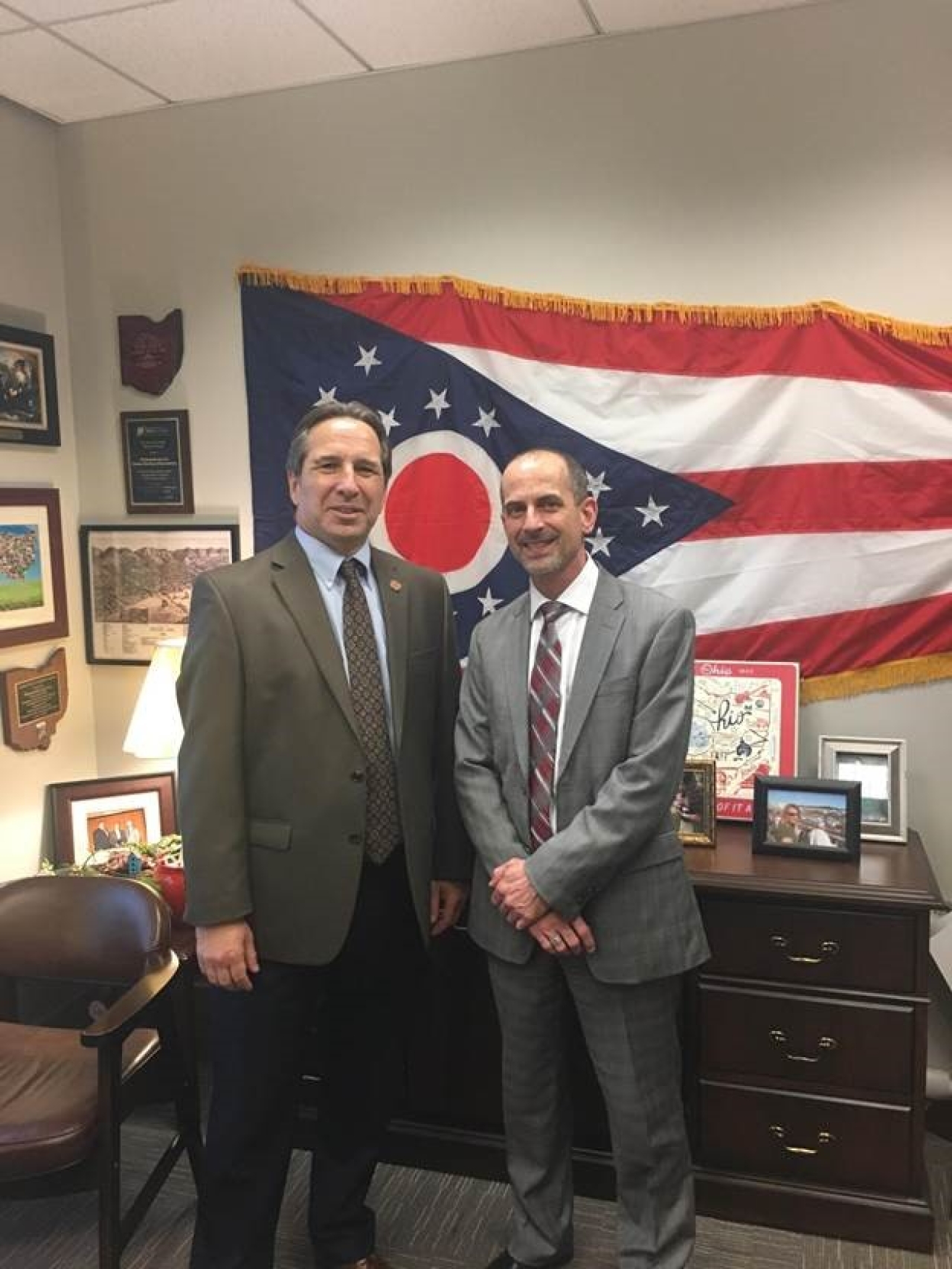
Ohio House Assistant Democratic Whip Brigid Kelly (D-Cincinnati) today responded to former Republican House Speaker cliff Rosenberger’s expedited resignation from the Ohio House amid an FBI investigation into events in which he may have been involved. Rosenberger initially announced he would resign May 1, but late Thursday announced he was resigning immediately.
Kelly says the about face amid outside political-party pressure raises new questions about the legislature’s work and the breadth and depth of the federal investigation. Kelly issued the following statement:
“It is no secret that the people’s work in the state legislature has become overshadowed by suspicions of corruption and violations of the public trust since former Speaker Rosenberger announced he could be part of an FBI investigation. We are hopeful his expedited resignation helps us all get back to work on behalf of the taxpayers sooner, but the truth is, it also creates new questions about how the outside influence of political party pressure during an election year may be dictating the terms, conditions and deadlines of the people’s work in the legislature.
“The former speaker was right – allegations of public corruption and breach of the public’s trust is bigger than one person. That is why, even though one person has resigned, we are concerned that the impact and scope of this investigation remains unclear.”
State Reps. John Boccieri (D-Poland) and Michele Lepore-Hagan (D-Youngstown) today expressed concern about House Bill (HB) 591, a Republican-led effort to once again overhaul the state’s school report card system. The bill would leave current triggers in place for schools that are under or near academic distress—a move the lawmakers say unfairly targets districts in academic distress like Youngstown, Lorain and at least 22 other districts across the state.
Assistant House Democratic Leader Nick Celebrezze (D-Parma) today issued the following statement in response to House Speaker Cliff Rosenberger’s (R-Clarksville) Tuesday announcement that he will resign effective May 1:
“This is a deeply troubling situation that restricts the ability of this institution to focus on issues and laws that improve people’s lives. While I personally like Cliff Rosenberger, the citizens of Ohio deserve to know the truth behind these allegations as the public trust of the taxpayers should be of utmost importance.”
“The one-party rule that has dominated our state for decades has led to unchecked power that has damaged not only this institution, but our state. Ohioans deserve better and that is why I agree that Cliff should step down immediately.”
“When public officials appear to act in their own interest instead of public interest, it shakes the entire confidence of the taxpayers. It is my sincerest hope that the nature of these allegations is made public soon, so that the House can refocus on the job at hand and move our state forward.”
Ohio House Democratic Leader Fred Strahorn (D-Dayton) today issued the following statement in response to House Speaker Cliff Rosenberger’s (R-Clarksville) Tuesday announcement that he will resign effective May 1:
“I genuinely like and have considered Cliff Rosenberger a friend throughout my tenure as Leader. I am disappointed to see the Speaker of the House embroiled in an FBI investigation. Currently, it is a cloud of unanswered questions and allegations but it will have a significant impact on our institution.
“I understand that even the perception of wrongdoing can compromise the ability of our institution to conduct the business of the people. This deeply saddening and unfortunate situation impedes our ability to effectively discuss and pass laws that make people’s lives better.
“It stands as a reminder of the dangers of prolonged one-party rules that can put the public interest in competition with private interest. It shakes the confidence in our ability to do good and damages the trust of taxpayers.”
Today marks the 50th anniversary of President Lyndon B. Johnson’s War on Poverty initiative. The day serves as a stark reminder that there’s still plenty of fighting to do, especially in Ohio.
The state jobs report for Nov. was released today, showing Ohio well-above the national unemployment rate with 427,000 Ohioans still looking for work. The U.S. economy is growing at the fastest pace since late 2011, but Ohio lost 12,000 jobs last month and the state’s unemployment rate continues to trend much higher than last year. State Rep. John Patrick Carney (D-Columbus) released the following statement in response to the news:
The state jobs report for Nov. was released today, showing Ohio well-above the national unemployment rate with 427,000 Ohioans still looking for work. The U.S. economy is growing at the fastest pace since late 2011, but Ohio lost 12,000 jobs last month and the state’s unemployment rate continues to trend much higher than last year. State Rep. Debbie Phillips (D-Albany) released the following statement in response to the news:
“As the U.S. economy expands at the fastest pace since 2011, the number of unemployed Ohioans remains at an abysmal 427,000. Gov. Kasich’s top-down economic policies are in full-effect, and it’s no coincidence that Ohio was number 1 in the nation for job loss in November. Ohio is moving in the wrong direction. Instead of catering to special interests, we should be prioritizing our middle class families, investing in our schools and communities and restoring accountability to the failing so-called economic development agency JobsOhio.”
Once again, Secretary Husted has revealed how rare of a problem so-called voter fraud is in Ohio compared with the real problems in our elections. Thirteen months after the November 2012 election, the Secretary is focused on 0.0003% of the 5.63 million votes cast. In that same election, over 47,000 voters had their ballots thrown out and over 3 million Ohioans did not participate in their election at all. When will the Secretary hold a press conference on this much larger number of voters and the real problems in Ohio elections?
The Secretary of State already has approval under Ohio law to implement full online voter registration. The website is already built and he should switch it on. He does not need additional legislative action. Online voter registration would simplify the process for voters and election officials to register and to verify registrations with fewer errors and with huge cost savings.
There are already mechanisms in the law to prevent non-citizens from voting and to punish illegal voting. These laws should continue to be enforced and illegal voting should not be tolerated.
State Rep. David Leland (D-Columbus) today issued the following statement in response to Tuesday’s announcement that House Speaker Cliff Rosenberger (R-Clarksville) will resign effective May 1:
“This is a stain on our democracy that interferes with the people’s business and reduces public confidence in our legislative process. This unfortunate incident is a reminder of what happens when one political party controls every level of state government.
“Though this is the tip of the iceberg in fully understanding the extent and level of political corruption, it should serve as a sobering reminder for some that nobody is above the law. We need checks and balances, and new leadership to restore integrity and trust in state government.”
In response to Gov. Kasich’s year-in-review speech given to members of the business community today, House Democratic Leader Tracy Maxwell Heard (D-Columbus) released the following statement:
“Cuts to communities and tax breaks that favor the rich have hurt the middle class and stymied Ohio's economic recovery. Ohio is one of the worst states in the country for job creation over the last 12 months and our unemployment is now higher than the national rate. Instead of favoring special friends and special interests, we need to start putting working and middle class families first."
Today, Gov. Kasich, Speaker Batchelder and President Faber spoke to members of the business community during a year-in-review speech at the Ohio Chamber of Commerce. State Rep. Debbie Phillips (D-Athens) released the following statement in response to today’s speech:
“Ohio is 44th in the nation for job creation; unemployment is at 7.5 percent-- significantly higher than the national average. Governor Kasich and Ohio’s GOP elected officials need an economic reality check. Instead of prioritizing millionaires and special interests, Ohio needs to grow our economy by putting working and middle class families first. What we heard today is more of the same failed trickle-down policies, which knocked Ohio back down just when we were starting on the road to recovery.”
Today, Gov. Kasich, Speaker Batchelder and President Faber spoke to members of the business community during a year-in-review speech at the Ohio Chamber of Commerce. State Rep. John Patrick Carney (D-Columbus) released the following statement in response to today’s speech:
House Minority Leader Fred Strahorn (D-Dayton) and state Rep. Nickie Antonio (D-Lakewood) today announced the unanimous House passage of legislation that urges Congress to award Annie and John Glenn with a Congressional Gold Medal for their lifetime of public service.
- Page 1
- Page 2
- Page 3
- Page 4
- Page 5
- Page 6
- Page 7
- Page 8
- Page 9
- Page 10
- Page 11
- Page 12
- Page 13
- Page 14
- Page 15
- Page 16
- Page 17
- Page 18
- Page 19
- Page 20
- Page 21
- Page 22
- Page 23
- Page 24
- Page 25
- Page 26
- Page 27
- Page 28
- Page 29
- Page 30
- Page 31
- Page 32
- Page 33
- Page 34
- Page 35
- Page 36
- Page 37
- Page 38
- Page 39
- Page 40
- Page 41
- Page 42
- Page 43
- Page 44
- Page 45
- Page 46
- Page 47
- Page 48
- Page 49
- Page 50
- Page 51
- Page 52
- Page 53
- Page 54
- Page 55
- Page 56
- Page 57
- Page 58
- Page 59
- Page 60
- Page 61
- Page 62
- Page 63
- Page 64
- Page 65
- Page 66
- Page 67
- Page 68
- Page 69
- Page 70
- Page 71
- Page 72
- Page 73
- Page 74
- Page 75
- Page 76
- Page 77
- Page 78
- Page 79
- Page 80
- Page 81
- Page 82
- Page 83
- Page 84
- Page 85
- Page 86
- Page 87
- Page 88
- Page 89
- Page 90
- Page 91
- Page 92
- Page 93
- Page 94
- Page 95
- Page 96
- Page 97
- Page 98
- Page 99
- Page 100
- Page 101
- Page 102
- Page 103
- Page 104
- Page 105
- Page 106
- Page 107
- Page 108
- Page 109
- Page 110
- Page 111
- Page 112
- Page 113
- Page 114
- Page 115
- Page 116
- Page 117
- Page 118
- Page 119
- Page 120
- Page 121
- Page 122
- Page 123
- Page 124
- Page 125
- Page 126
- Page 127
- Page 128
- Page 129
- Page 130
- Page 131
- Page 132
- Page 133
- Page 134
- Page 135
- Page 136
- Page 137
- Page 138
- Page 139
- Page 140
- Page 141
- Page 142
- Page 143
- Page 144
- Page 145
- Page 146
- Page 147
- Page 148
- Page 149
- Page 150
- Page 151
- Page 152
- Page 153
- Page 154
- Page 155
- Page 156
- Page 157
- Page 158
- Page 159
- Page 160
- Page 161
- Page 162
- Page 163
- Page 164
- Page 165
- Page 166
- Page 167
- Page 168
- Page 169
- Page 170
- Page 171
- Page 172
- Page 173
- Page 174
- Page 175
- Page 176
- Page 177
- Page 178
- Page 179
- Page 180
- Page 181
- Page 182
- Page 183
- Page 184
- Page 185
- Page 186
- Page 187
- Page 188