

State Seal State Seal State Seal
Home Button Home Button Home Button
 

Democratic News

{"removedFilters":"","searchUpdateUrl":"\/news\/democrat\/update-search","start":1311,"pageSize":10,"sort":"PublishDateDesc"}

State Rep. David Leland (D-Columbus) today released the following statement in response to the report on clean energy jobs in the Midwest released Tuesday by the Clean Energy Trust and Environmental Entrepreneurs (E2):

“We are the first generation to understand the human causes of climate change—and the last generation to be able to stop it. The results of this report are clear: clean energy powers Ohio’s economy, creates good paying jobs and contributes to a cleaner environment and happier, healthier families and communities.
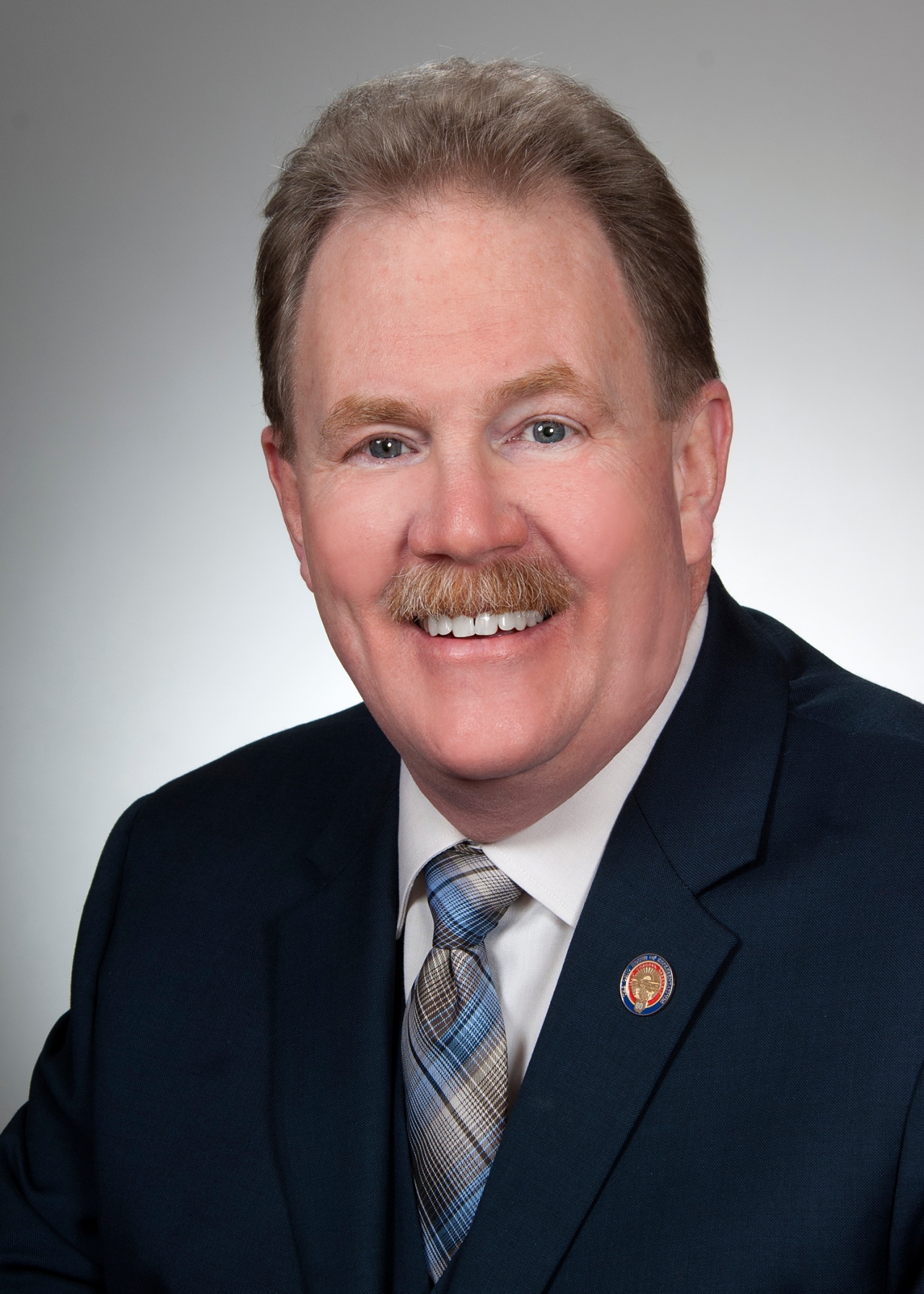

State Rep. Janine R. Boyd (D-Cleveland Heights), the highest ranking Democrat on the House Health Committee, issued the following statement after GOP lawmakers rejected Democratic efforts to include protections for Ohio women in Senate Bill (SB) 23, a bill that would implement a near-total ban on abortion in Ohio.

“I submit to citizens that this bill is not about ‘life.’ It proposes that the state will force nearly all pregnant women to carry their pregnancies to term, regardless of how that might threaten her health and her economic security, and it erodes the fundamental freedom we all have as Americans to make important medical and health decisions.” 

Over objections from state Controlling Board member Rep. Jack Cera (D-Bellaire), the Republican-controlled panel tasked with oversight of state spending approved a Kasich Administration request today to pay off a Grand Lake St. Marys landowners’ lawsuit against the state using severance tax revenue from the Ohio Department of Natural Resources oil & gas fund. Republicans slipped the maneuver into the state budget at the eleventh hour with no debate or notice.

“Lawmakers should be held accountable for resorting to one-time cash-grabs and shell games to prop up unstable budgets and poor job growth,” Cera said. “This sheds new light on the dangerous and dishonest financial tricks lawmakers will play to bolster political talking points. This funding should be used to put people back to work in Eastern Ohio at good-paying jobs that can sustain a family and let us plan for our future.”

The cash-grab to pay off the almost decade-old lawsuit makes use of some $15 million in severance tax funds that are normally required to be used for related oil and gas drilling needs in impacted communities. Republicans state lawmakers already transferred $10 million from the fund to prop up the state budget shortfall early in June.

“This multi-million-dollar cash grab by the state shows where Columbus politicians’ priorities are – not with hardworking taxpayers and property owners in Eastern Ohio,” Cera added. “After almost ten years to plan for a lawsuit settlement in the western part of Ohio, state officials failed to responsibly plan for the future and instead are robbing our area of what’s rightfully ours.”

The settlement comes on the heels of the state budget vote. Cera tried to amend the budget to dedicate at least $10 million in severance tax money for infrastructure repairs and related services in Eastern Ohio communities. His efforts were defeated along party lines.

State Rep. Janine R. Boyd (D-Cleveland Heights), Ranking Member of the House Health Committee, sent a letter Wednesday to the committee chairman demanding more hearings on Senate Bill (SB) 23, the six-week abortion ban, which was rushed through committee this week during the busiest part of the state budget season. Boyd also seeks explanations of last-minute changes in the latest version of the bill. She issued the following statement: 

In a political effort to hamstring Ohio House Democratic lawmakers in a pro-gun, anti-gun debate today on the House floor, Republicans brought forward House Bill (HB) 233 for a vote, legislation that allows concealed carry permit holders to knowingly bring guns or deadly weapons into daycares, schools, airports, bars and other restricted spaces, so long as the permit holder leaves when asked to do so. Individuals who refuse to leave or return to the same business while carrying a prohibited weapon within 30 days will be subject to a fourth degree misdemeanor.

“This isn’t just a solution looking for a problem, but it is creating a whole new set of public safety problems by overturning Ohio laws designed to keep us safe and secure,” said House Democratic Leader Fred Strahorn (D-Dayton). “This will trample private property rights of business owners and create confusion in secure locations like airports, police stations, schools and daycares. As a gun owner and strong second amendment supporter, I think Ohioans deserve to feel safe and secure, free from the fear of intimidation or tragedies this bill could create,” added Strahorn.

Brave servicewomen and men have met the challenges our country faces time and again to uphold the sacred freedoms and inalienable rights that make our nation great. Our veterans’ unwavering and selfless service is a daily reminder that we cannot take our liberty for granted.

Our state’s commitment to supporting our troops off the battlefield must reflect the realities veterans are often faced with when returning home. We must display the same determination and steadfast service to our veterans that they have shown our state and country. Our resolve to improve our state, nation and world must meet the same dedication our veterans have put forth in standing against injustice and oppression. 

We are sincerely thankful to those who have given so much. 

Ohio House Democratic Leader Tracy Maxwell Heard (D-Columbus) released the following statement in recognition of Ohioans’ defeat of the GOP’s dangerous attack on middle class families, Senate Bill 5. Two years ago Friday, the citizen referendum of Senate Bill 5—Issue 2 at the ballot—successfully defended the rights of middle class workers to collectively bargain for fair wages and safe work conditions. 

On Friday, State Rep. and Air Force Veteran Connie Pillich (D-Montgomery) welcomed and introduced participants of the Celebrating Women Veterans healthcare event at the Marriott Kingsgate in Cincinnati.

On Wednesday, State Representative Denise Driehaus (D-Clifton) attempted to create a Tax Expenditure Review Board, which would make recommendations to the General Assembly and the Governor about the value of awarding tax credits to entities that receive money from the legislature.  Rep. Driehaus introduced an amendment to Substitute House Bill 107 that mirrors legislation (HB 81) she introduced at the beginning of the current General Assembly. 

Reps. Kathleen Clyde (D-Kent) and Mike Foley (D- Cleveland) are calling on Gov. Kasich to delay signing Senate Bill 193 until next week-- a move that would ensure Senate Bill 193 does not apply to the 2014 gubernatorial election.

“By delaying the effective date of this bill, Gov. Kasich can show the public that this isn’t a hasty, self-interested attempt to limit his third party competition for the 2014 election,” Rep. Foley said. “I think the Governor should do the right thing and rise above the cynical perception this bill has created.”

SB 193 would make it harder for third party candidates to qualify for the 2014 ballot if it is signed into law by Gov. Kasich within the next two days. The legislation has become known by many as the John Kasich Re-election Protection Act, as it seems to be an attempt to disqualify Libertarian candidate Charlie Earl from the 2014 gubernatorial race.

Rep. Chris Redfern (D- Catawba Island) announced that on Wednesday the Ohio House of Representatives unanimously passed House Concurrent Resolution 20, commemorating the 200 year anniversary of the Battle of Lake Erie and the War of 1812, by a vote of 96-0. The battle was a turning-point in the War of 1812 and a catalyst for the eventual American victory over the British.

State Reps. John Rogers (D-Mentor-on-the-Lake) and Shane Wilkin (R-Piketon) announced the House passage of House Bill 85 today, which creates a methodology for Ohio counties to petition the State for additional funding in capital cases which exceed a threshold that might otherwise place the county in financial distress, if not fiscal ruin. 

Described by Rep. Rogers and Rep. Wilkin as one of Ohio’s largest homicide investigations, the costs associated with prosecuting the recent capital crimes in Pike County could exceed $5 million. Pike County, with a annual budget of less than $10 million, is nevertheless mandated to enforce Ohio law, pursue justice on behalf of the State, and hold those responsible to account.   

“Ohio is charged with a great responsibility – to seek justice, to protect the rights of its citizens, and protect our communities, all the while ensuring that those who commit horrendous acts of violence, including murder, are held accountable,” Rogers said.

Today, the Republican-controlled Ohio House of Representatives overrode eleven items Governor John Kasich vetoed in the recently passed state budget, House Bill (HB) 49. Under the House’s overrides, Medicaid expansion will have to be reauthorized through the state Controlling Board and new taxes on working people could be put in place as a condition of healthcare coverage – if the Senate takes up the House overrides.

“After six years and almost two-billion dollars in Republican cuts to local communities, it’s our responsibility to take an all-of-the-above strategy to rebuild and restore our economic engines – our local communities,” said House Democratic Leader Fred Strahorn (D-Dayton). “While Ohio’s economy teeters on the verge of recession, we need to put our communities and local taxpayers in the best position possible to plan for their future and invest in job creation and community development.”

State Reps. John Patterson (D-Jefferson) and John Rogers (D-Mentor-on-the-Lake) expressed concern today that historic state budget cuts to local public schools have shifted the responsibility of providing education for Ohio’s children to local taxpayers—resulting in $1.6 billion in new school funding levies since 2011.

Today, taxpayers throughout Ohio will be asked to consider a total of 72 new school funding requests at a cost of close to $260 million. The added downward pressure on local taxpayers comes at a time when the state is sitting on $1.5 billion in cash reserves and is close to realizing some $400 million in budget savings due to Medicaid expansion. 

“The state has shifted the responsibility of funding public education to local taxpayers, hurting our schools, children and middle class families,” said Rep. Patterson. “It is irresponsible to abandon our state obligation to provide education for our children. This isn’t a sustainable way of funding public education in our state, and local taxpayers can’t afford it.”

Local school funding has been cut by roughly half-a-billion dollars since the enactment of Gov. Kasich’s first biennial state budget. The number of school funding levies since Gov. Kasich took office has increased dramatically—so has the dollar amount of proposed local tax increases.

“The escalating financial pressure to provide for an adequate and equitable education remains the principal responsibility of the State of Ohio,” Rep. Rogers said. “The continued trend of the current administration to shift the burden of school funding to the local taxpayer effectively hurts our schools, our communities and our kids. If we are serious about fostering economic growth and opportunity here in Ohio, then we should be investing in our children, our future.”

On July 4th 1776, our founders signed a declaration founded in ideals of freedom, fairness and equality. These ideals formed the fabric of our society, together weaving the greatest American ideal: the “American Dream”.

In 2017, the promise of the “American Dream” feels out of reach for many people who are working harder than ever just to get by. As corporations and politicians have shipped good-paying middle-class jobs overseas, owning a home, a reliable car and starting a family has become a pipe dream, especially to our young Americans.

House Assistant Minority Whip and state Rep. Paula Hicks-Hudson (D-Toledo) today sent a letter to Republican Governor Mike DeWine urging him to veto provisions in House Bill (HB) 62, the state’s two-year transportation budget, that would penalize cities using traffic safety cameras.


Ohio House Democratic lawmakers today sent a letter to Governor Kasich urging him to line-item veto the Medicaid expansion freeze in the state operating budget, House Bill (HB) 49, that will end healthcare coverage for over half-a-million people.

“The people of Ohio deserve representatives in Columbus who will stand up and fight for them,” said state Rep. Emilia Strong Sykes (D-Akron). “Passing the Medicaid expansion freeze and kicking people off of Medicaid is unacceptable, harmful, and cruel and unusual punishment.”

If approved by the federal government, the GOP freeze to Ohio’s Medicaid expansion will phase out medical coverage for over half-a-million Ohioans, leaving families with minimal healthcare options. 

“We need to provide healthcare for Ohio’s families, all of Ohio’s families.” Sykes said. “Without access to healthcare, lives will be lost and costs will rise. Ohio cannot afford to pay for the increased costs that will come by taking away people’s healthcare.”

*Editor’s note: A copy of the letter sent to Gov. Kasich is pasted below. 

State Reps. Stephanie Howse (D-Cleveland) and Randi Clites (D-Ravenna) today during a Statehouse news conference introduced the Ohio Equal Pay Act, legislation to recognize the full value and potential of Ohio’s working women. The announcement comes as advocates mark ‘Equal Pay Day’ across America, the date to which women must work to make up for the lost wages relative to their male counterparts.

House Democrats today supported the final passage of House Bill (HB) 62, the state’s bipartisan two-year transportation budget. The bill makes historic investments in public transit and local communities for road and bridge repairs.

“Democrats were able to come together to make historic investments to improve public transit and allow local communities to rebuild crumbling roads and bridges,” said House Minority Leader Emilia Strong Sykes (D-Akron). “I am encouraged that moving forward we can continue to work together to put people and communities first to restore the promise of our state.”

The Ohio House voted today on the Republican-led charge to restrict worker’s access to healthcare and benefits through the state’s $581 million Bureau of Workers’ Compensation (BWC) budget bill, House Bill 27.

GOP lawmakers undertook a significant rewrite of what is typically a noncontroversial budget bill to include benefit restrictions on firefighters with cancer. The $581 million measure also cuts in half the amount of time all workers currently have to file a claim, something Democrats say could economically destabilizes thousands of Ohio families.

“The brave men and women who run into burning buildings while everyone else runs away deserve better than new barriers to care when they are seriously injured or get sick on the job,” said House Minority Leader Fred Strahorn (D-Dayton). “Retreating from firefighters who contract cancer from their dangerous line of work and closing the door early on workers seeking treatment for workplace injuries seriously undermines the economic stability of working families across the state.”  

COLUMBUS— Amid a more than $1 billion financial shortfall, Ohio’s legislative Republicans pushed state budget negotiations closer to the brink Tuesday and today with eleventh hour horse-trading over a Medicaid lockout and complex money maneuvers, leaving Gov. John Kasich less than 48 hours to review the state budget, House Bill 49, before the start of the new fiscal year.


“This budget not only threatens the economic well-being of working families, but attacks the health of hundreds of thousands of vulnerable Ohioans,” said Rep. Alicia Reece (D-Cincinnati). “At a time when Ohio leads the nation in opioid deaths, too many babies are dying before their first birthday in our state, and many families have love ones fighting some type of cancer or other serious health condition, blocking access to Medicaid for those who need it most literally puts the lives of Ohioans on the line.”

Amid a more than $1 billion financial shortfall, Ohio’s legislative Republicans pushed state budget negotiations closer to the brink Tuesday and today with eleventh hour horse-trading over a Medicaid lockout and complex money maneuvers, leaving Gov. John Kasich less than 48 hours to review the state budget, House Bill 49, before the start of the new fiscal year.

“While the rest of America is recovering from the global recession, six years of Republican mismanagement have held us back from solving real problems like attracting better-paying jobs, reducing healthcare costs, and strengthening our children’s schools,” said House Democratic Leader Fred Strahorn (D-Dayton). “Our economy continues to underperform and people at home are feeling it. The state is on a downward spiral to recession.” 

Before state lawmakers head into conference committee to hammer out the final details of the state biennial budget, House Democratic leaders today questioned whether the legislation adequately addresses the state’s current fiscal crisis that has left Ohio families struggling to make ends meet and communities underwater.

“The Ohio GOP’s misguided tax policy has not created the economic stability, better-paying jobs or real growth that was promised. While the rest of the nation is recovering from the Great Recession, Ohio has been held back,” said House Democratic Leader Fred Strahorn (D-Dayton). “After six years of being wrong – wrong about a tax policy that favors the wealthy over the middle class, wrong about state revenue numbers for 10 out of 11 months, wrong even about how much needs to be cut to balance the budget – I have no doubt that the same failed approach based on ideology instead of facts will only do more harm to working Ohio families and send our economy deeper into a tailspin.” 

State Rep. David Leland (D-Columbus) will offer testimony during Education and Career Readiness Committee TODAY, Tuesday, June 20 at 3:00 p.m. in the Statehouse on House Bill (HB) 220, legislation to shine a light on how charter schools spend taxpayer dollars. The Columbus lawmaker’s testimony follows the Columbus Dispatch’s recent editorial reporting of nearly $200 million tax dollars that ECOT, the state’s largest online charter school, spent on management fees to companies owned by its founder.

“Just as Ohio parents want to know that their children are receiving the highest quality possible education in school, Ohio taxpayers deserve to know how their hard-earned dollars are being used,” said Leland. “Our Constitutional mandate to create a “thorough” and “efficient” public school system demands nothing less.”

WHO:              State Rep. David Leland (D-Columbus)

WHAT:            Education and Career Readiness Committee

Sponsor testimony for HB 220

WHEN:            TODAY, Tuesday, June 20 at 3:00 p.m.

WHERE:          Ohio Statehouse, Room 121


Working collaboratively with Ohio educators and finance officers for the past 15 months, Ohio Reps. Bob Cupp (R, Lima) and John Patterson (D, Jefferson) are co-sponsoring a comprehensive and transparent school funding proposal.


“As Ohio legislators, we are committed and determined to find an education funding system for our state’s pre-kindergarten through grade 12 students; one that is fair, rational and justifiable in contrast to our current system that is often unfair and nearly always incomprehensible,” the two lawmakers wrote of the plan.