


Rep. Glassburn Warns Republican SNAP Funding Plan Leaves Larger Counties Short, Risks $350M Loss in Federal SNAP Benefits
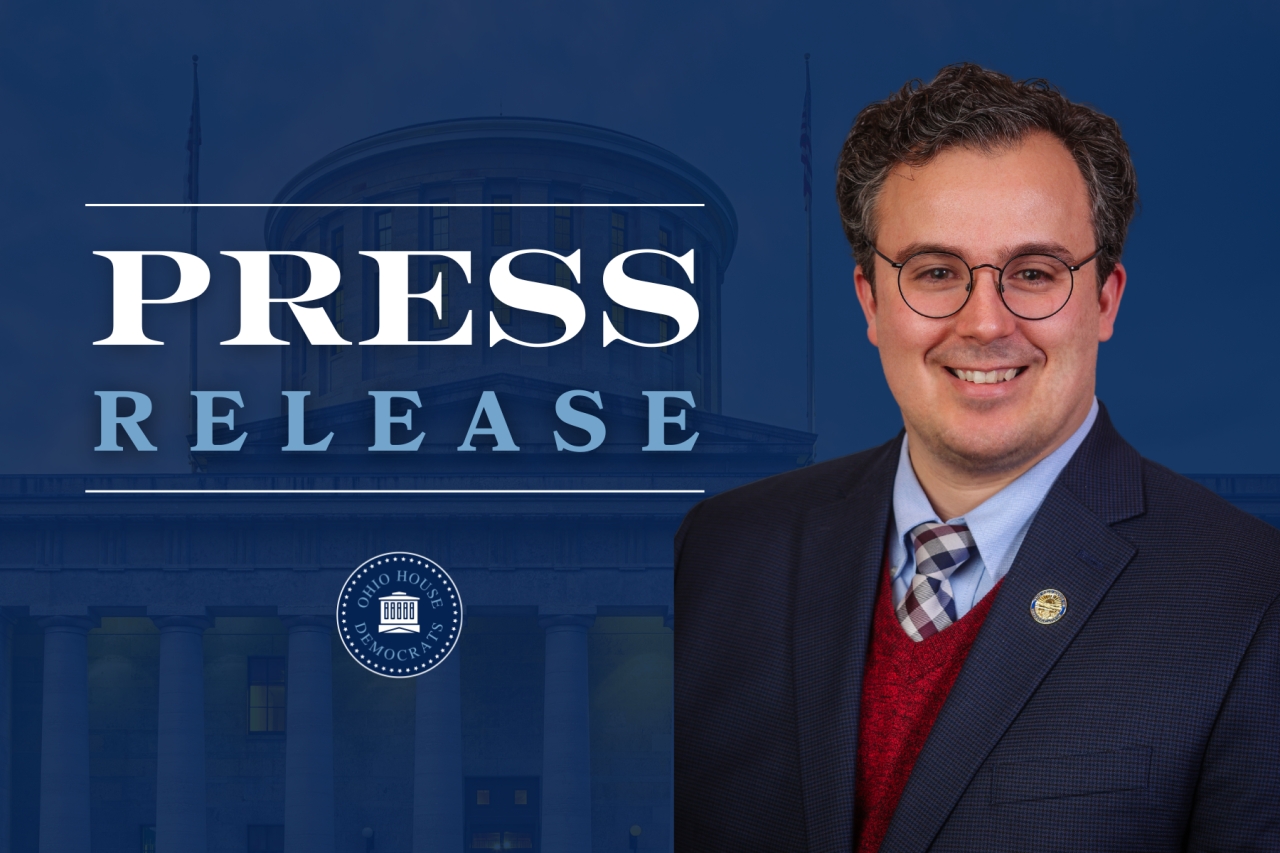
COLUMBUS – State Rep. Chris Glassburn (D–North Olmsted) today warned that a new provision in House Bill (HB) 730 underfunding Supplemental Nutrition Assistance Program (SNAP) administrative costs is short-sighted and creates a dangerous precedent of allocating state resources based on political affiliation rather than need.
Recent changes to SNAP administrative cost-sharing included in federal legislation H.R. 1 will shift additional costs onto states and counties, creating a $38.2M shortfall in Ohio in FY27. The House majority’s funding plan, unveiled Tuesday, allocates $12.5M to ensure that 59 of Ohio’s 88 counties– all of which are represented by Republican lawmakers–will see 100% of their shortfall covered.
However, families on food assistance in the remainder of the state are largely excluded. For example, in Cuyahoga County, the House majority’s plan would provide approximately $226K – just 3% of the funding gap created by the federal changes – leaving a $7.5M funding shortfall for the county.
“Over 70% of Ohio’s SNAP caseload is in our ten largest counties, yet those communities are receiving less than 18% of this state funding. What we’re seeing is the creation of a two-tiered system where some communities are made whole and others are left behind," said Rep Glassburn. “When access to basic food assistance starts to depend on where you live or what party represents you in the state legislature, that should concern everyone.”
The proposal is also a dramatic departure from Ohio’s longstanding funding formula, which distributes SNAP administrative funding based on caseload. Instead, the Republican plan adopts an approach that disproportionately favors small, rural counties while allocating mid-sized and larger counties just a fraction of their expected shortfall.
The uneven funding shortfalls created by the state in HB 730 will directly impact county staffing levels and case processing capacity, making it harder for County JFS staff to meet federal error rate standards and increasing the risk that Ohio will lose over $350M in federal SNAP benefits next fiscal year.
“This proposal simply doesn’t add up,” continued Rep. Glassburn. “If counties are forced to cut staff, error rates will rise, and Ohio could lose up to $350 million in federal SNAP benefits this fall. At that point, the state will either have to backfill those costs with state dollars or cut food assistance for families - that’s a much bigger hole than what we’re refusing to fill today.”
Under new federal policy created by H.R. 1, states could lose federal funding for SNAP benefits if their casework error rates exceed 6%. Currently Ohio’s SNAP error rate sits at 9%, which is lower than the national average of 10.93%. Cutting staff and resources for County JFS offices will only make it harder to bring error rates down, putting hundreds of millions of dollars in SNAP benefits at risk.
In Ohio, County Job and Family Services offices are responsible for eligibility determinations and compliance with federal rules, but funding for administrative costs is shared between the state and county. Ohio is one of just nine states that requires counties to share in SNAP administrative costs, contributing to Ohio’s disproportionate reliance on local property taxes. Lawmakers also raised concerns that the proposal reflects a broader pattern of shifting costs from the state to local governments.
“We’ve seen this playbook before - push costs down to counties, force difficult budget decisions locally, and then blame local governments when property taxes go up,” concluded Rep. Glassburn. “If the state fails to fully fund these responsibilities, counties will have no choice but to cut services, lay off staff, or rely more heavily on local taxpayers. That’s a lose-lose for taxpayers and for families who rely on these benefits to put food on the table. This isn’t fiscal conservatism - it’s fiscal negligence.”
Rep Glassburn is urging the legislature to restore a funding approach based on caseload to avoid triggering avoidable federal penalties that would create a far larger fiscal problem in the next budget cycle.
EDITOR’S NOTE: A breakdown of fiscal impacts by county is attached here.